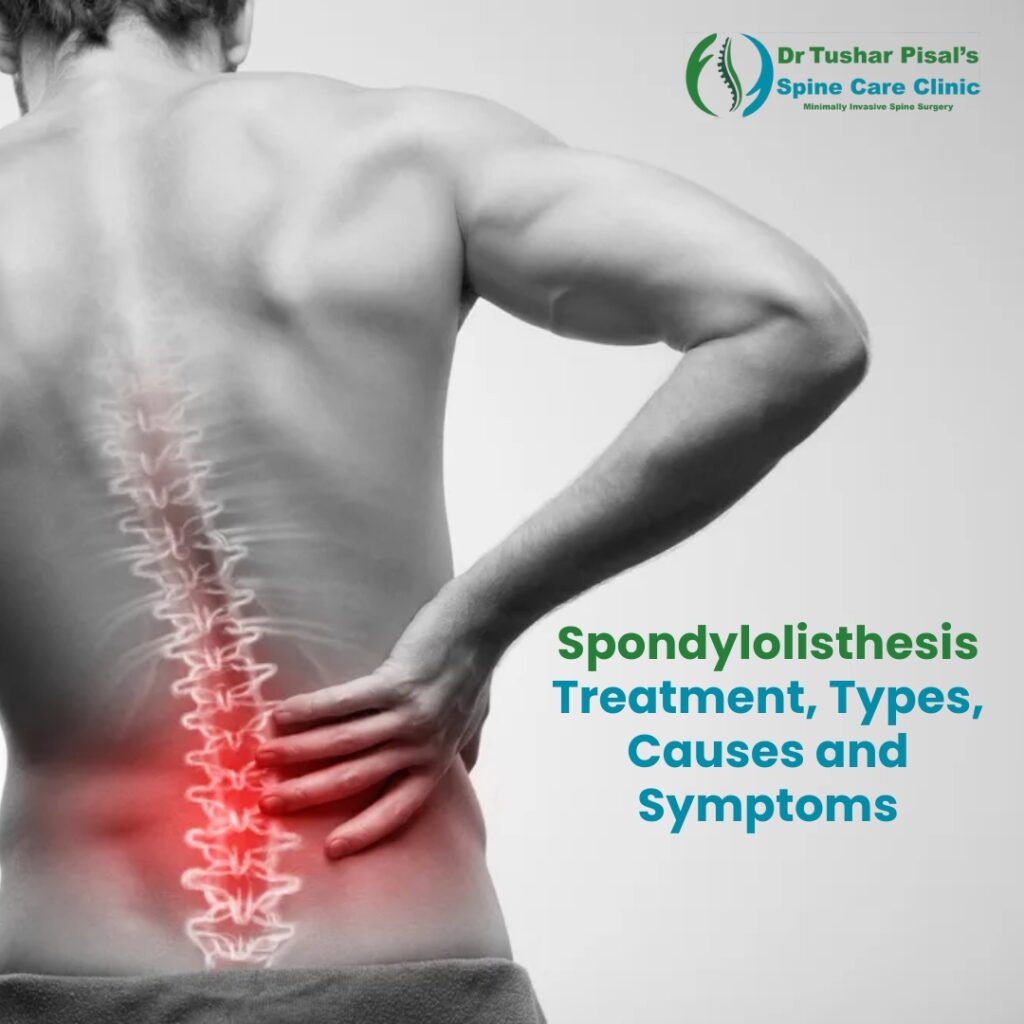
Understanding Spondylolisthesis
Spondylolisthesis is a spinal condition where one of the vertebrae slips forward over the one below it. This displacement can occur in the lower back (lumbar spine) and may lead to pain, nerve compression, or restricted movement. The condition can affect people of all ages, from adolescents engaged in sports to older adults with degenerative spine changes.
Dr. Tushar Pisal, a renowned spine specialist in Pune, provides expert diagnosis and advanced spondylolisthesis treatment using both conservative and surgical approaches. His patient-centric care focuses on pain relief, restoring spinal alignment, and improving quality of life.
Types of Spondylolisthesis
Spondylolisthesis is categorized based on its cause and nature of vertebral slippage. Understanding the type is crucial for determining the right treatment approach.
- Congenital (Dysplastic) Spondylolisthesis:
This type is present from birth due to abnormal spinal bone formation, which makes the vertebra prone to slipping. - Isthmic Spondylolisthesis:
Common in young athletes, this form occurs due to a defect or fracture in a part of the vertebra called the pars interarticularis. - Degenerative Spondylolisthesis:
The most common type in adults, it develops due to age-related wear and tear, leading to joint instability and slippage. - Traumatic Spondylolisthesis:
Caused by direct injury or trauma that damages the spinal bones or ligaments, leading to vertebral displacement. - Pathologic Spondylolisthesis:
Occurs when bone diseases or infections weaken the spinal structure, making the vertebra susceptible to slipping. - Post-surgical Spondylolisthesis:
Rarely, spinal surgery may alter spine mechanics and lead to instability, resulting in slippage over time.
Causes of Spondylolisthesis
Spondylolisthesis can occur due to various reasons, often depending on age, lifestyle, and underlying spinal conditions.
- Spinal degeneration: Age-related breakdown of spinal joints and discs weakens the spine, causing instability.
- Stress fractures: Repeated strain on the spine, especially in athletes (gymnasts, weightlifters), can lead to small fractures that cause slippage.
- Congenital defects: Abnormal bone formation during birth may lead to weak spinal alignment.
- Trauma or injury: Accidents or sudden impacts can disrupt spinal alignment.
- Arthritis: Chronic joint inflammation can lead to instability and slippage in older adults.
- Post-surgical complications: In rare cases, spinal procedures may lead to mechanical imbalance.
Common Symptoms of Spondylolisthesis
The symptoms of spondylolisthesis vary depending on the severity and degree of slippage. Some people may have mild symptoms, while others experience significant discomfort.
- Lower back pain: A dull, persistent ache that worsens with activity or prolonged standing.
- Leg pain or sciatica: Compression of nerves may cause pain that radiates down one or both legs.
- Stiffness and reduced flexibility: Difficulty bending or twisting the lower back.
- Tingling or numbness: Nerve irritation can lead to sensations in the legs or feet.
- Muscle weakness: Weakness in the legs, making walking or standing difficult.
- Changes in posture or gait: Forward slipping can affect body alignment, leading to an altered walking pattern.
If these symptoms persist or worsen, it’s important to seek evaluation from a spine specialist like Dr. Tushar Pisal for an accurate diagnosis and effective treatment.
Diagnosis of Spondylolisthesis
A thorough diagnosis is essential to determine the extent of vertebral slippage and any associated nerve involvement. Dr. Tushar Pisal uses advanced diagnostic tools to confirm the condition, including:
- Physical examination: Evaluating posture, range of motion, and pain points.
- X-rays: Helps visualize the degree of slippage.
- MRI scan: Detects nerve compression and soft tissue issues.
- CT scan: Provides detailed images of bone structures.
Once the type and grade of spondylolisthesis are determined, a personalized treatment plan is created.
Treatment Options for Spondylolisthesis
Treatment for spondylolisthesis depends on the severity of symptoms and the degree of vertebral slippage. Dr. Tushar Pisal emphasizes a conservative approach first, progressing to surgical options when necessary.
Non-Surgical Treatments:
- Rest and Activity Modification:
Avoiding high-impact activities and allowing time for healing can reduce symptoms. - Medications:
Anti-inflammatory drugs and pain relievers help control discomfort. - Physiotherapy:
Strengthening the core and back muscles improves spinal stability and posture. - Bracing:
A supportive brace may be prescribed to limit movement and promote alignment. - Epidural Steroid Injections:
These help reduce inflammation around affected nerves, providing pain relief.
Surgical Treatments:
When conservative methods fail to provide relief, or the slippage is severe, surgical intervention may be necessary.
- Spinal Fusion Surgery:
The most common procedure for spondylolisthesis, where two or more vertebrae are permanently joined to prevent further movement. - Decompression Surgery (Laminectomy):
This involves removing part of the bone or tissue pressing on the nerves to relieve pain and restore mobility.
Dr. Tushar Pisal uses minimally invasive spine surgery techniques, ensuring faster recovery, smaller incisions, and reduced hospital stay.
Recovery and Prevention
Recovery time varies depending on the treatment method and patient’s overall health. Following postoperative care instructions, physiotherapy, and maintaining a healthy weight are crucial for successful recovery.
To prevent spondylolisthesis or its recurrence, individuals are encouraged to:
- Maintain proper posture and ergonomics.
- Engage in regular low-impact exercises.
- Strengthen core muscles.
- Avoid heavy lifting or repetitive back strain.
Why Choose Dr. Tushar Pisal for Spondylolisthesis Treatment in Pune?
Dr. Tushar Pisal, one of the best spine specialists in Pimpri Chinchwad, Pune, has extensive experience in diagnosing and treating complex spinal disorders, including spondylolisthesis. His patient-focused approach combines advanced medical technology, personalized care, and minimally invasive surgical techniques for optimal outcomes.
Conclusion
Spondylolisthesis can significantly affect mobility and quality of life if left untreated. However, with early diagnosis and proper management, most patients can achieve lasting relief and return to their normal activities.
If you are experiencing chronic back pain, stiffness, or nerve symptoms, consult Dr. Tushar Pisal for comprehensive spondylolisthesis treatment in Pune and regain your spinal health with confidence.